The culture
Tang dynasty Xi'an: music, poetry, the pipa and a pagoda
The Tang culture a Silk Road show borrows from: what Wikipedia says about the dynasty's poetry, painting and court music, the foreign songs and dances that arrived on the road and the pagoda that Xuanzang's scriptures filled.
Pick my zone ↗Quick answer
The Tang dynasty ruled from 618 to 907 and is regarded as a high point of Chinese civilisation. Its capital Chang'an, now Xi'an, hosted poets such as Li Bai and Du Fu, court music with the pipa, and songs and dances brought in from foreign regions along the Silk Road. A Silk Road show with Tang culture is built from those threads.
Tang culture, in Wikipedia's words
| Thread | What it records |
|---|---|
| Dynasty | Ruled from 618 to 907, with an interregnum between 690 and 705 |
| Poetry | Traditionally the greatest age for Chinese poetry, with Li Bai and Du Fu |
| Music | Court music flourished, with instruments such as the popular pipa |
| Foreign arts | Songs, dances and instruments from foreign regions became popular |
| Pagoda | The Wild Goose Pagoda was first built in 652 under Xuanzang |
A golden age in a cosmopolitan capital
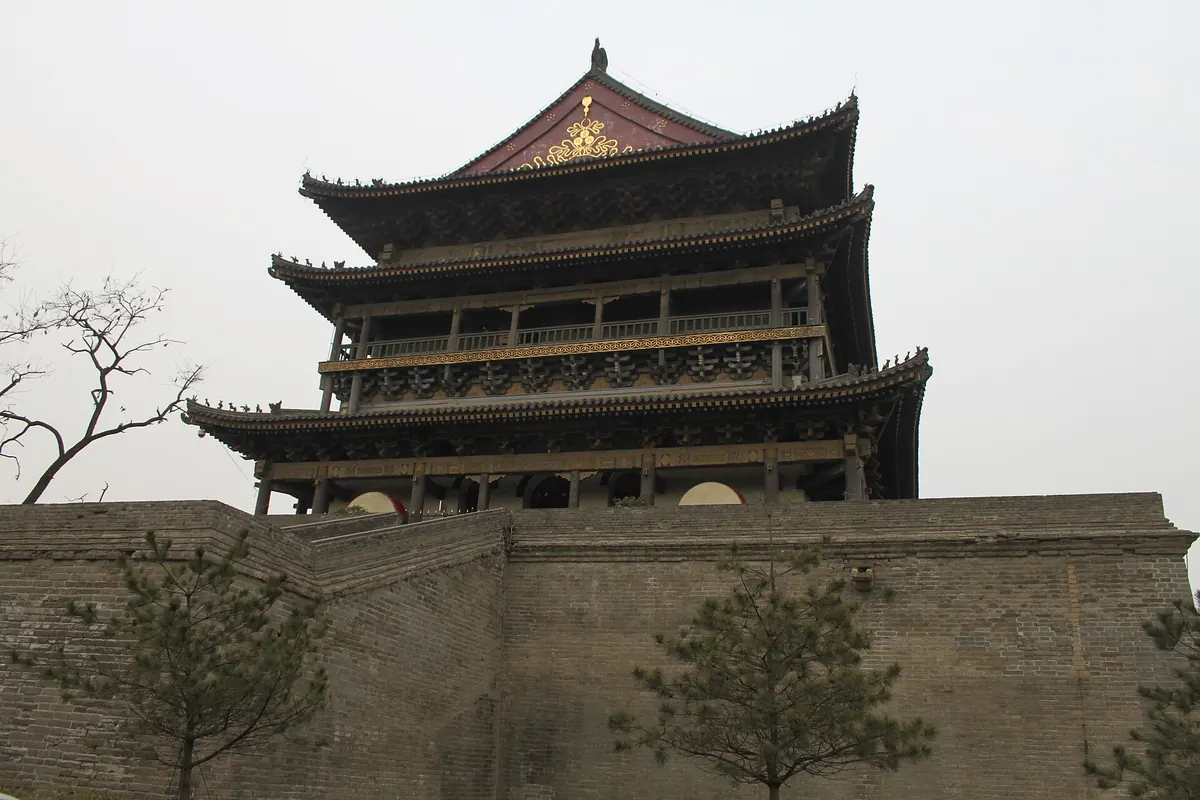
Wikipedia says the Tang dynasty ruled China from 618 to 907, with an interregnum between 690 and 705. Historians generally regard it as a high point of Chinese civilisation and a golden age of cosmopolitan culture. The capital at Chang'an, today's Xi'an, was the world's most populous city for much of the dynasty, and the court enjoyed visits from numerous dignitaries from foreign lands. The dynasty raised large armies to compete with nomadic powers for control of Inner Asia and the trade routes along the Silk Road. That context explains why a Tang-themed show and a Silk Road show are the same show in Xi'an: the road is what made the culture look outward. When a stage production claims to be full of Tang-dynasty culture and history, as the booking page does, it is reaching for this mixed, outward-looking world.
Poetry and painting
The Tang is traditionally considered the greatest age for Chinese poetry. Wikipedia names two of China's most famous poets, Li Bai and Du Fu, as belonging to this age, contributing with poets such as Wang Wei to the monumental Three Hundred Tang Poems. Many famous painters, among them Han Gan, Zhang Xuan and Zhou Fang, were active. None of these names will appear in a show's programme as a rule, and the booking page does not say that they do, so this guide does not promise them. They are here as background, because a visitor who knows that Tang poems still form part of school reading can place a lantern-lit scene or a line of verse on stage more easily. It is a small amount of reading that adds a surprising amount to an evening.
Court music and the pipa
Wikipedia records that Chinese court music flourished in the Tang with instruments such as the popular pipa. The pipa is a plucked instrument that Wikipedia calls the Chinese lute, and it became increasingly popular in China from the third century through the Sui and Tang dynasties. The same article adds that songs, dances and musical instruments from foreign regions became popular in China during the Tang dynasty. That is where the Silk Road enters the story. Music moved along the same routes as silk and camels, and Chang'an was where it was heard. Glazed figure groups of musicians on camels, which Wikimedia Commons catalogues as Tang sancai ware, give that exchange a physical form. Whenever a stage show about the Silk Road uses music and dance, this is the tradition it draws on, whatever the specific pieces.
Xuanzang and the Wild Goose Pagoda
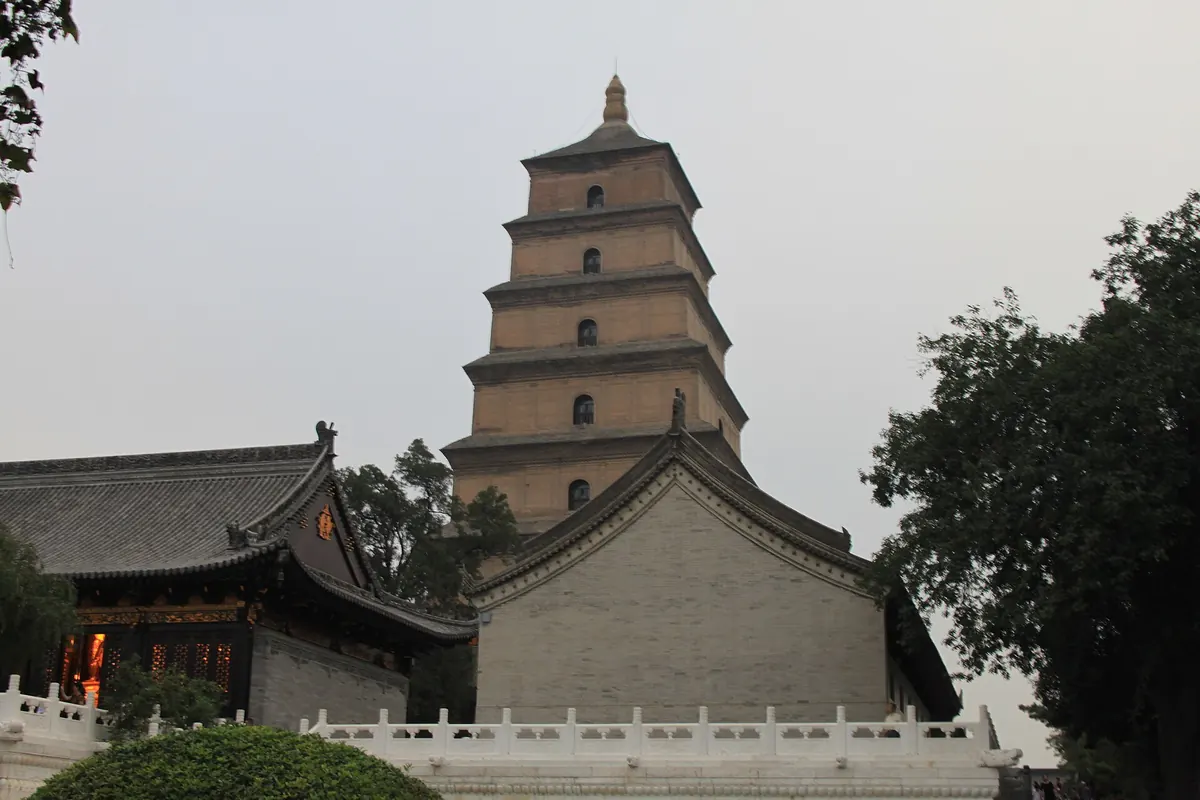
One surviving Tang monument tells the Silk Road story as clearly as any show. Wikipedia says the Giant Wild Goose Pagoda was first built in 652, when Xi'an was the Tang capital Chang'an, under the direction of the monk and translator Xuanzang. It was built to store Buddhist scriptures and images that Xuanzang brought from India. Wikipedia describes its association with Xuanzang and the translation work at the Daci'en Temple as evidence of the transmission of Buddhism and texts between South, Central and East Asia during the Tang period. The original five-storey structure was rebuilt under Wu Zetian and repaired in later dynasties, and the present brick exterior reflects major work during the Ming. The pagoda was inscribed in 2014 as a component of the UNESCO Silk Roads corridor.
The city wall and what it covers
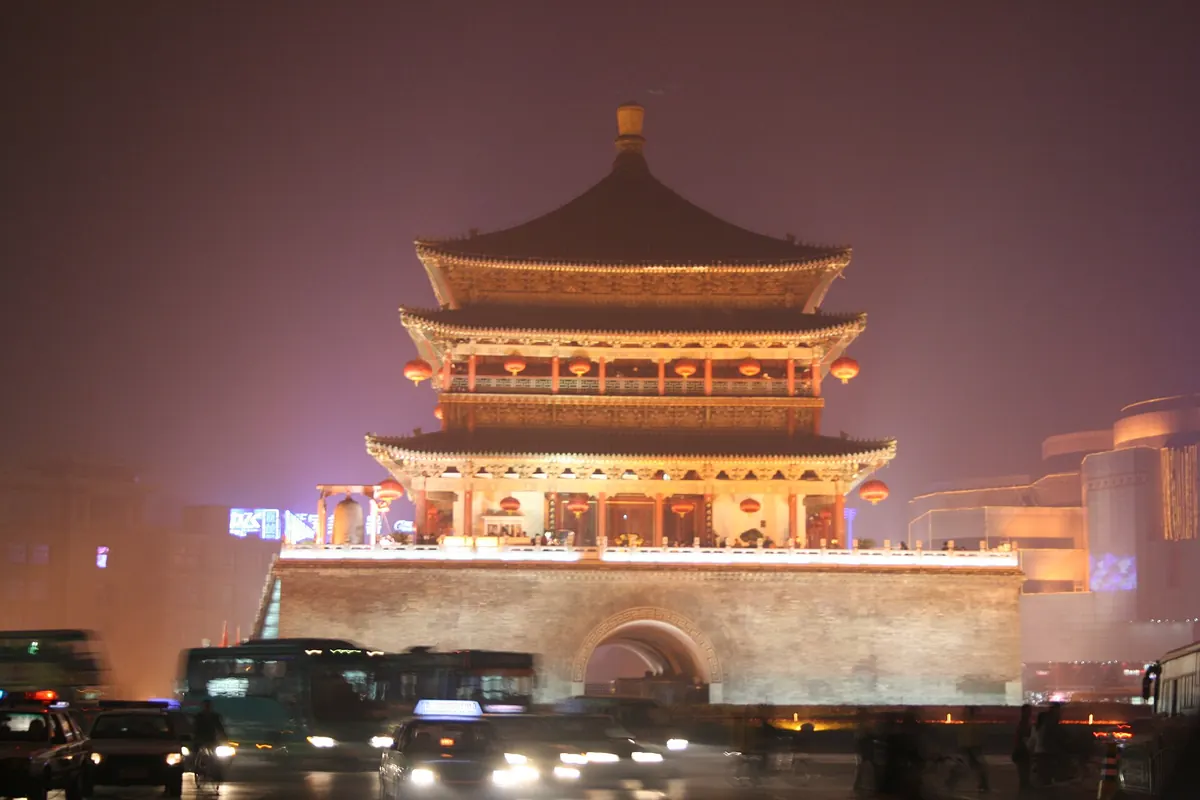
The best-known walls and towers in Xi'an are not Tang. Wikipedia says the Bell Tower was built in 1384 in the early Ming dynasty, and that the Tang-dynasty Jingyun Bell once housed there was moved to a museum in 1953, with a replica installed in 1997. The Ming dynasty built the city wall, starting in 1370, over an existing Tang palace wall. Wikipedia says the wall is rectangular with a total length of 13.74 kilometres, is 12 metres high and encloses an area of about 11.5 square kilometres. It describes the fortifications as one of the oldest, largest and best preserved Chinese city walls, and the Ming enclosed an area about an eighth the size of the Tang city at its height. That scale is worth holding on to when you look at the wall: the Tang capital was far larger than the old centre visitors walk around today. The same history is why an all-inclusive day tour that includes the wall and a pagoda is a sensible companion to an evening show.
Frequently asked questions
Is the city wall of Xi'an from the Tang dynasty?
No. Wikipedia says the Ming dynasty built it, starting in 1370, over an existing Tang palace wall.
What is the pipa?
A plucked lute that Wikipedia lists among the instruments of Tang court music.
Who built the Wild Goose Pagoda?
Wikipedia says it was first built in 652 under the direction of the monk Xuanzang, to store scriptures he brought from India.
Sources